Choosing the Right Conveyor System: A Buyer’s Guide Based on What Actually Works
-
There Is No Universal Conveyor – And That’s a Good Thing
-
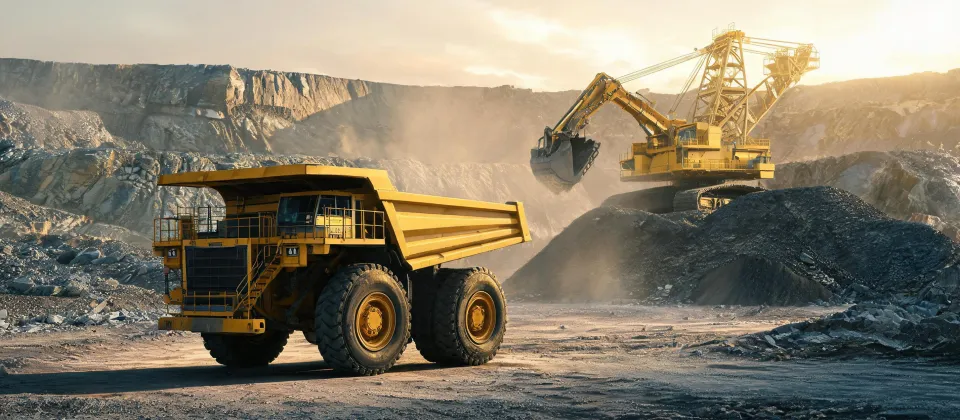
Scenario A: Heavy Loads & Continuous Mining / Energy Operations
-
Scenario B: Light Precision Assembly (Electronics, Medical Devices, Small Parts)
-
Scenario C: Food, Pharma, & Hygienic Environments
-
Scenario D: Highly Flexible Lines with Frequent Changeovers
-
How to Identify Which Scenario You’re In
There Is No Universal Conveyor – And That’s a Good Thing
When I first started handling equipment purchasing for our plant back in 2020, I assumed conveyor systems were pretty interchangeable. “A belt is a belt, you just pick the cheapest one.” Three years and about $200,000 in procurement later, I know better. The reality is that the best conveyor for your operation depends entirely on what you’re moving, how fast, and under what conditions.
Over the last four years, I’ve managed orders for conveyor systems across three facilities – roughly $180,000 annually with 6–8 vendors. I’ve made mistakes that cost us downtime and money, and I’ve found solutions that save both. Here’s what I wish someone had told me upfront: the right conveyor choice splits into a few distinct scenarios. Pick yours, and the decision gets a lot clearer.
For this guide, I’m focusing on Dorner conveyor systems because they’re a strong middle-market option we’ve used extensively. But I’ll also tell you where they don’t fit – a vendor who honestly says “that’s not our strength” earns more trust than one who promises everything.
Scenario A: Heavy Loads & Continuous Mining / Energy Operations
If you’re moving coal, ore, or heavy bulk materials 24/7, you need brutal durability. Steel frames, high-torque gear motors, and massive belt widths. Dorner’s primary focus is light- to medium-duty conveyor systems (up to around 200 lbs per linear foot). For anything heavier, I’d honestly recommend looking at specialized heavy-mining conveyor manufacturers – this is not Dorner’s core strength.
“In 2022, I almost ordered a Dorner 5200 series for a limestone transfer point because the quoted price was 40% lower than the competitor. The Dorner sales engineer actually told me: ‘For your load profile, you’ll see premature wear.’ That saved us a $25,000 mistake. I now value a vendor who knows their limits.”
If your application is continuous heavy-duty, save yourself the headache and go with a specialist. But if you have occasional medium loads (say, packaged material handling in a mining yard), Dorner’s modular systems can still work – just oversize the drive unit.
Scenario B: Light Precision Assembly (Electronics, Medical Devices, Small Parts)
This is where Dorner really shines. Their 2200 series and newer MPB (Multi-Purpose Belt) conveyors offer clean operation, precise indexing, and easy customization. I’ve used them for PCB assembly lines and medical device production – they’re quiet, vibration-free, and the modular design lets you reconfigure the line in hours instead of days.
My initial approach to these applications was to buy a pre-engineered system from a big-name integrator. Cost: around $12,000 per station. When we switched to Dorner’s modular conveyors and did the integration ourselves, we cut that to $4,500 per station – and the maintenance team loved being able to swap segments without calling an engineer.
The surprise wasn’t the price difference – it was how much easier it became to train operators. They could understand the conveyor layout intuitively. That saved us about 6 hours of training per new line.
Scenario C: Food, Pharma, & Hygienic Environments
If you’re in food processing or pharmaceutical packaging, cleanliness requirements are non-negotiable. Dorner has a separate hygienic line (the AquaGard and AquaPruf series) that meets USDA and FDA standards. We installed AquaPruf conveyors in a snack food line last year. The open frame design allows washdown without removing components – that alone saved our sanitation crew about 2 hours per shift.
However – and this is a big “however” – I once made the mistake of trying to use a standard 2200 series conveyor in a wet environment because it was cheaper and available immediately. The bearings failed within three weeks. The frustration of that $2,000 mistake still stings. You’d think a belt conveyor would survive a little moisture, but I was wrong. Now I insist on specifying the correct washdown-rated series from the start.
If sanitation is critical, spend the extra 20-30% upfront. It pays back in avoided downtime within a year.
Scenario D: Highly Flexible Lines with Frequent Changeovers
For e-commerce fulfillment centers or packaging lines that need to switch product sizes daily, flexibility is king. Dorner’s modular conveyor platform (think of it as a conveyor “building block” system) allows you to add, remove, or reposition sections without welding or special tools. We have a line that’s been reconfigured four times in two years – each changeover took a day instead of a week.
The frustration of this scenario: standard conveyor lengths were never exactly what we needed. With Dorner’s configurator (available on their website – no sales call needed), we could design custom lengths in 15 minutes. That eliminated the classic problem of “we need 3.2 meters but they only sell 3.0.”
I’d argue that if your production schedule changes more than twice a year, modularity is worth a premium of at least 15-20% over fixed conveyor systems. The time savings in changeovers will dwarf that cost.
How to Identify Which Scenario You’re In
Here’s the decision tree I now use. Answer these three questions:
- What’s the weight per unit length? Over 200 lbs/ft? → Skip Dorner, go heavy-duty specialist. Under 200 lbs? → Likely suitable.
- Are you washing down the line regularly? Yes → Must go with hygienic series (AquaGard/AquaPruf). No → Standard series fine.
- How often do you reconfigure the line? More than 2 times/year → Prioritize modular (Dorner MPB or similar). Rarely → Fixed systems may be cheaper.
Don’t take my word as gospel – every facility has quirks. But this framework has saved me from at least three bad purchases that I know of. And if you ever get a salesperson who says “we can do everything,” ask them directly: “What’s the one thing you’d recommend I go elsewhere for?” The honest answer is worth more than any brochure.
Pricing examples based on Dorner 2200 series quotes obtained from dorner.com, January 2025 – verify current rates.