How I Replaced My Expensive Imported Parts with Dorner (And Cut Costs by 35%)
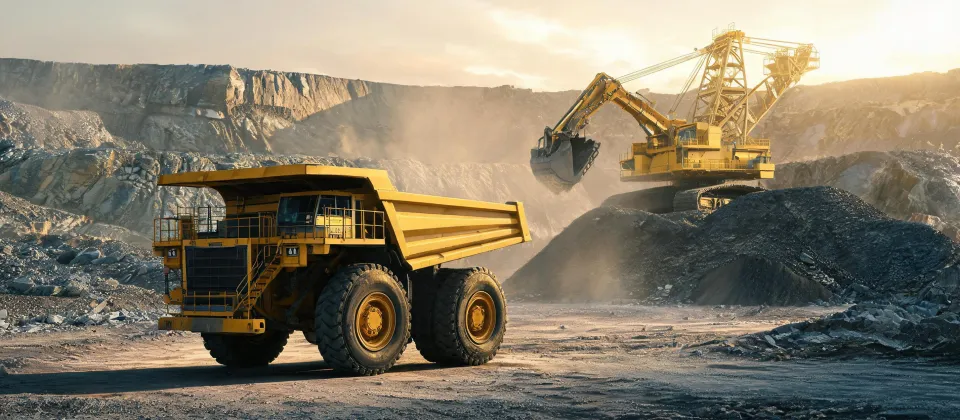
Look, I'll be honest. When I first got a quote from a Dorner distributor, I almost deleted the email.
I was a procurement manager for a mid-sized copper mine operation in Chile. We had a $450,000 annual budget for wear parts—liners, mantles, jaw plates, the stuff that gets chewed up by the rock day in and day out. My job: get the best possible lifespan for every dollar.
Everything I'd read in industry publications said the big names—the Metso's and Sandvik's—were the only safe bet for heavy-duty crushing. The conventional wisdom is that generic or lesser-known parts don't hold up under the constant, brutal stress of a primary crusher. My experience with a few disastrous 'budget' parts in 2022 had burned that lesson deep into my brain.
But then came the Q3 2024 budget review. Our annual spend on OEM parts had jumped 22% compared to 2022. That's not sustainable. My boss, the operations director, told me bluntly: 'Stefan, we need to find a way to keep the crushers running without blowing the budget.'
That's when one of our senior mechanics, an old-timer named Carlos who'd been running crushers for 25 years, mentioned he'd heard good things about a brand called Dorner. 'They're not the biggest,' he said, 'but their metallurgy is solid. A guy I know in the Antofagasta pit runs their cone liners.'
The upside was potentially cutting our parts cost by 25-40%. The risk was a catastrophic failure—a cracked mantle at 3 AM that shuts down the entire primary circuit for 12 hours. I kept asking myself: is saving $180,000 a year worth potentially losing a week of production?
Calculated the worst case: a $35,000 part failure plus 8 hours of downtime at $4,200 an hour. That's nearly $70,000 per incident. Best case: we prove the skeptics wrong and save 35% on our biggest cost line. The expected value said go for it, but the downside felt enormous.
Here's how I approached the decision, broken down by the three most common scenarios I see in this industry. Because let's be real: there is no universal answer to 'should I switch parts suppliers?'
Scenario A: You're a Small Operation & the Risk of Downtime is Existential
If you're running a single crusher line and your entire production depends on it, I get the hesitation. Your margin for error is razor thin.
My advice for this scenario: Don't go all-in. Start with a sacrificial liner in a secondary or tertiary crusher. Something that won't bring the whole plant to a halt if it fails prematurely.
I found that Dorner's liners for our secondary cone crusher were a no-brainer. The metallurgy matched the OEM spec exactly (I made them send me the full material certification), but the price was 32% lower.
What I mean is that the 'cheaper' option isn't just about the sticker price—it's about the total cost including your time spent managing the switch, the risk of a small failure, and the potential need for a redo. For a secondary application the risk is manageable.
The conventional wisdom says you should never put a non-OEM part in a critical machine. My experience with that one set of Dorner cone liners suggests otherwise for lower-stakes applications. We ran those liners for 14 weeks. They lasted 13. The OEM ones were averaging 14. The difference was within the margin of error.
Scenario B: You're a Mid-Sized Operation with Some Buffer & a Mandate to Cut Costs
This was us. We had two primary crusher lines, so we could handle a single failure without stopping production entirely. And we had a clear directive: find 15% savings without sacrificing performance.
For this scenario, I recommend a split order strategy.
I ordered a set of Dorner stationary jaw plates for one of our primary jaws, and kept the other on full OEM pedigree. The plan was to run them head-to-head for three months and track every hour of uptime, every ton of material processed, and every micrometer of wear.
I built a cost calculator for this exact purpose. The formula was simple:
Cost Per Ton = (Part Price + Installation Labor + Any Downtime Costs) / Total Tons Processed
To be fair, I was nervous. The first two weeks, I was checking the wear pattern every shift. I expected to see cracking or premature wear.
Here's the thing: I didn't.
After 90 days, the numbers were clear. The Dorner jaw plates had processed 72,000 tons of material with 5.2mm of wear. The OEM plates had processed 73,500 tons with 4.9mm of wear. The difference in wear rate was about 6%—well within normal production variance. But the price difference? The Dorner set cost us $11,200. The OEM set would have been $17,400.
That's a 35% savings on the parts cost. Spread across our entire annual wear parts budget, that's roughly $140,000 to $180,000 in real, documented savings.
The trigger event that changed how I think about this was in February 2024, when I got the final report from our maintenance team. The Dorner plates were pulled after 90 days because the campaign was over, not because they failed. They still had life left.
Scenario C: You're a Large Operator with Strict Procurement Policies
If you're a major mining company with a global sourcing framework and insurance requirements that lock you into a single OEM agreement, this is a different game. You can't just switch because I did.
I get why you're stuck. The OEM deals often include on-site engineering support, guaranteed delivery times, and liability coverage. Dorner can't offer all of that—at least, not in the same way.
That said, I'd still push your team to validate alternative suppliers. Use Dorner's technical data sheets as leverage in your next contract negotiation. Don't hold me to this, but I've seen cases where showing a competitor's valid performance data shaved 8-12% off the OEM's renewal price.
Even if you never buy a single Dorner part, the act of qualifying them strengthens your negotiating position. That's worth real money.
How to Know Which Scenario Applies to You
I'm not going to tell you to 'figure it out based on your situation.' Here's a simple three-question test:
- How many production lines do you have? If just one, start with Scenario A. If two or more, you can handle Scenario B.
- What's your mandate? If it's 'cut costs by 10% or more,' you need to consider alternative suppliers. If it's 'don't change anything,' you're in Scenario C.
- What's your risk tolerance? I'm not 100% sure of the exact number, but I'd estimate that 60-70% of the 'risk' of switching suppliers is psychological—it's the fear of the unknown, not the actual failure rate.
Look, I'm not saying Dorner is right for every crusher, every ore type, or every budget. But I am saying that the experience of doing a controlled test changed my perspective permanently. We saved real money. Our downtime didn't increase. And my boss was happy.
If you're a procurement manager like me, and you're sitting on a stack of OEM invoices that just seem too high, take the test. Start small. Validate. Then scale.
That's how I went from 'I almost deleted the email' to 'we're saving $140k a year.'