Should You Buy a Dorner Conveyor? An Honest, Scenario-Based Guide
If your search history includes 'cop killer Dorner,' 'Jason Dorner latest,' 'eddie outlet,' or 'best friend halloween costumes,' this post is probably not what you need. This article is about the other Dorner: Dorner Conveyors, the manufacturing company in Hartland, Wisconsin that makes precision conveyor systems.
I'm an engineer who has handled conveyor procurement and integration orders for nine years. I've personally made (and documented) 14 significant mistakes, totaling roughly $117,000 in wasted budget. Now I maintain the checklist our team uses before we approve any conveyor quote. The most useful thing I've learned is this: there is no single 'best' Dorner conveyor. There is only a best fit for your specific situation.
Three Situations, Three Different Answers
I sort every new request into three buckets. You can do the same with three simple questions. What are you moving? What is the environment around the conveyor? And how far does the product need to travel?
If your product is light enough to carry with two hands, if the environment is relatively clean and dry, and if the conveyor path is inside a machine cell, you're in the first situation. If your product line is washed down with chemicals or needs to pass a food safety audit, you're in the second. And if you are moving heavy, abrasive, hot, or bulk material over long distances, you're in the third. The answer is different in each case.
1. Standard automation: light loads, short distances, tight space
This is where Dorner is hard to beat. In our packaging lines, the 2200 Series has been reliable for small plastic housings, battery packs, and sealed cartons. The frame is compact, the belt options are broad, and the online configurator made our design review much faster. According to Dorner's website (dorner.com, accessed January 2025), the 2200 Series is designed for precision movement and can be configured online. That sounds basic, but it's a big deal when you are trying to fit a conveyor between two machines.
The advice here is straightforward: use the configurator, get a fixed quote, and check the gear motor orientation before ordering. In September 2022, I approved a 16-foot conveyor with the gear motor on the wrong side. It looked fine on my screen. The result was 37 brackets, roughly $4,600 in material, and a warehouse shelf full of parts that did not fit. That was not Dorner's fault. It was mine. After the third rejection in Q1 2024, I created the pre-check list that now sits on our Engineering shared drive.
If your product weight is under 50 pounds per foot, the path is under 30 feet, and the line does not require frequent washdown, a standard Dorner system is a sensible default. For that situation, I'd recommend it over a custom-built system. But don't over-spec. You do not need a custom frame for every corner, and custom parts create one-off spare part problems later.
2. Washdown, food, or pharma: cleanability is the main requirement
I have mixed feelings about custom stainless steel conveyors. On one hand, they can be built to fit an awkward floor plan exactly. On the other hand, every custom feature becomes a special spare part. That is why I look at Dorner's AquaPruf family first for washdown areas. It is not a universal answer, though.
Here's something that caught me in the first year: 'washdown-compatible' is not a single specification. It depends on the IP rating, the chemical concentration, the water temperature, and the spray distance. I do not mean a minor difference. I mean a conveyor that works fine in one washdown bay can fail in another where the chemicals are stronger. Check the actual spec sheet before you choose the series.
I went back and forth between AquaPruf and a fully custom stainless conveyor for two weeks. AquaPruf offered easier spare parts and experienced local integrators; the custom design offered a perfect fit for an unusual machine base. We chose AquaPruf because our maintenance team did not need another semi-custom machine. If you are in that situation, the same logic often applies: standard parts beat perfect geometry unless the geometry makes the standard part unsafe or impossible.
3. Heavy, abrasive, long-distance bulk handling: look elsewhere
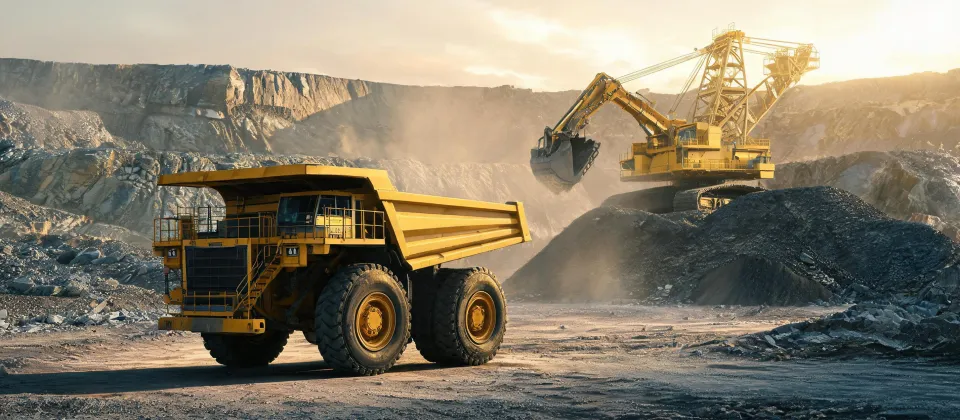
This is the situation where I usually tell people not to buy a Dorner conveyor. That is not a criticism of Dorner. It is the boundary of any precision modular conveyor system. If you are moving hot castings, crushed minerals, heavy aggregate, or anything that hits the belt with impact, a small-frame conveyor with plastic chain or a light belt is the wrong tool.
What most people don't realize is that a modular conveyor's 'standard lead time' often includes buffer time for the manufacturer's production queue. It is not necessarily how long your order takes. That buffer matters, but it is not the main risk here. The main risk is structural: impact loading and heavy belt tension can break components that were designed for lighter duty.
For this third situation, the honest advice is to look for a heavier structural conveyor designed for impact and dust. I am not going to name competitors, because you can define the requirement and let the market respond. One more note: if you are shopping used, check the age of the system. A 'millennium-era' conveyor can look like a great deal, but obsolete controls and hard-to-find belts can turn a bargain into an expensive project. Verify spare parts availability before you bid.
Here's something vendors won't tell you directly: the first quotation on a configurable conveyor is not a promise of total cost. The total cost includes integration, sensor mounting, controls, spare parts, and downtime risk. The lowest quoted price is often not the lowest total cost.
Which Scenario Are You In?
You don't need a detailed calculation to answer this. Ask your line supervisor three things. First, what is the heaviest product that will cross the conveyor? Second, will the conveyor be washed down, and with what? Third, is the conveyor path inside one station or does it connect stations over a long distance?
If the answer to the first question is 'two hands or less,' if the washdown is occasional or nonexistent, and if the path is under 30 feet, you are in the first scenario. Use Dorner's configurator, verify motor orientation, and move forward. If a food safety auditor will see this line and the washdown is daily, you are in the second scenario. Check the AquaPruf spec against your chemical and spray distance before buying. If the material itself is heavy enough to damage a work boot, or if the conveyor is hundreds of feet long, you are in the third scenario. Get structural conveyor quotes instead.
That's the pattern I wish someone had shown me before the $117,000 of mistakes. It is not a dramatic conclusion. It is just the difference between buying for a specific production reality and buying a name because someone told you it was safe. (Mental note: verify motor orientation before approving the next BOM.)
Dorner makes excellent precision conveyors. They are not the answer for every material handling problem. When you match the machine to the situation, the decision becomes easier and a lot less expensive.
Pricing and product details are for general reference. Verify current specifications and lead times with Dorner before making a purchase decision.